ENCCC Annual Meeting: Strengthening Europes Semiconductor Network

ENCCC Annual Meeting: Strengthening Europe’s Semiconductor Network
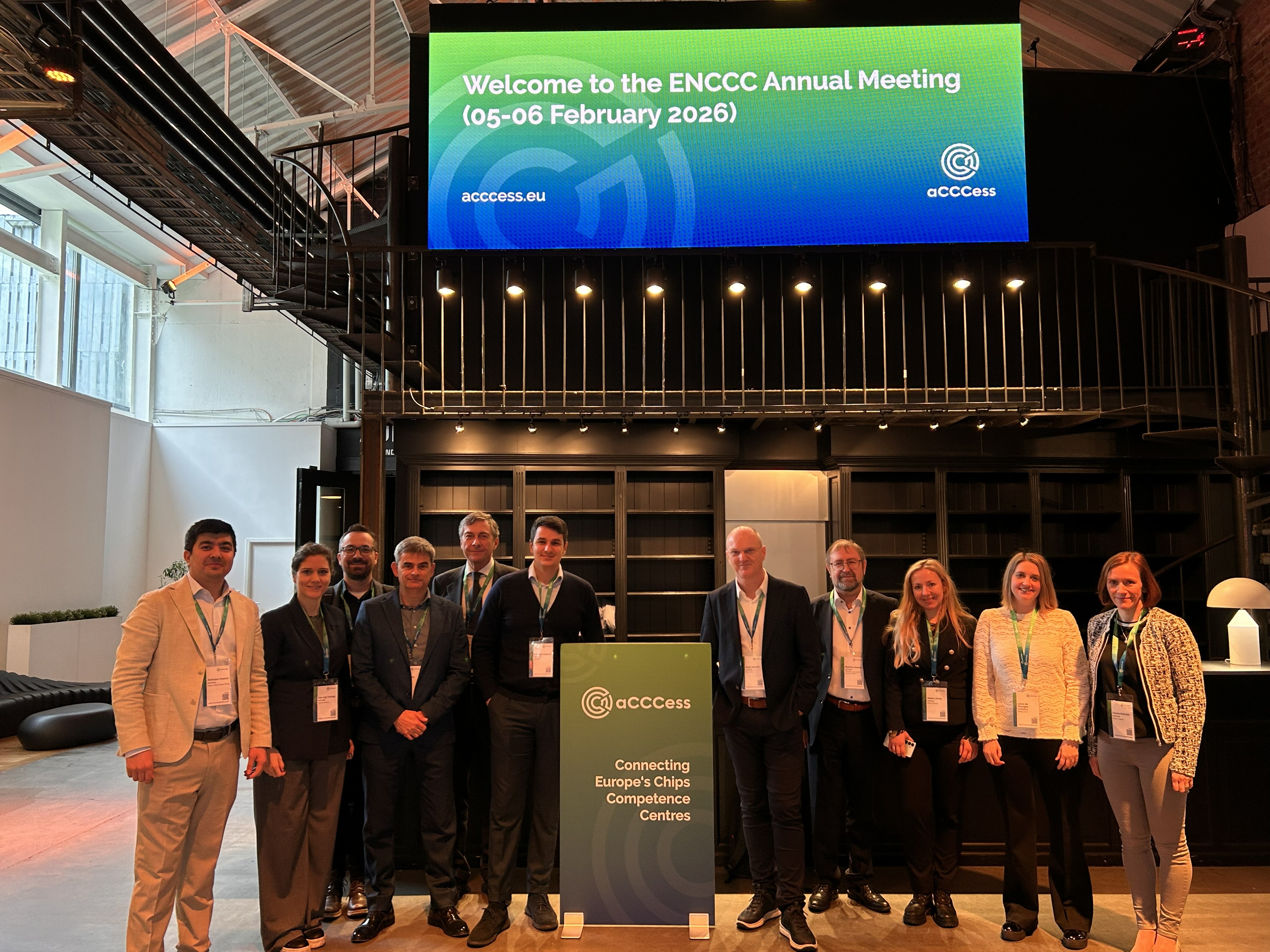
On 5–6 February in Brussels, the first ENCCC Annual Meeting brought together all 30 European Chips Competence Centres (CCCs), along with representatives from the Chips Joint Undertaking (Chips JU), pilot lines, the EU Chips Design Platform, industry associations and key ecosystem partners.
The meeting was held in the framework of the ECS Brokerage Event, organised by Chips JU in cooperation with the three industry associations AENEAS, EPoSS and INSIDE—also associated partners of aCCCess. For the first time, the entire CCC network met in person to reflect on its first year of operation and align priorities for the next phase.
Year One in Review
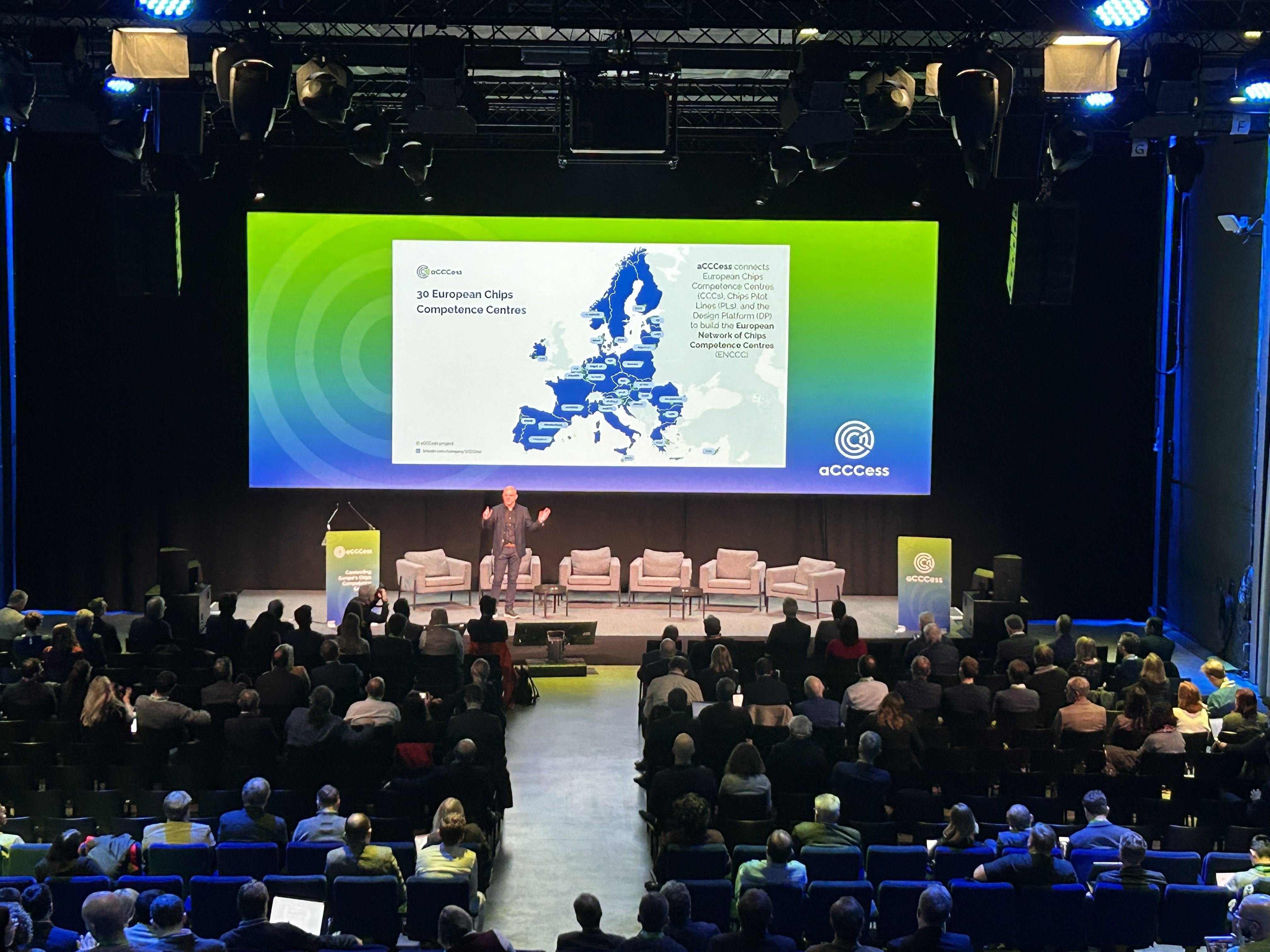
The programme opened with contributions from Chips JU and aCCCess. Following introductory remarks from Dr. Jari Kinaret, Executive Director of Chips JU, Régis Hamelin (BLUMORPHO), Coordinator of aCCCess, presented the project’s first-year journey. He highlighted how the Coordination and Support Action (CSA) facilitates the establishment of the ENCCC, enables structured exchange among centres and supports the development of common frameworks across Europe.
Katharina Neubert and Matthias Künzel (aCCCess | VDI/VDE Innovation + Technik) then provided a transparent overview of network performance, presenting KPIs and a 360° snapshot of the Competence Centres. Their analysis outlined tangible progress while identifying areas where stronger coordination and visibility remain necessary.
Panel Discussion: Experiences from the Ramp-Up Phase
The first panel, moderated by Michael Leopold (aCCCess | Silicon Alps), featured Anton Chichkov (Chips JU), Maria Huffman (Swedish Chips Competence Centre), Mariana Fernandes (POEMS – Portugal), Karel Masařík (Czech Semiconductor Centre) and Josephine Vassallo Parnis (Malta Semiconductor Competence Centre).
The discussion focused on ramp-up experiences, early market traction and strategic priorities. Panelists candidly addressed administrative hurdles, recruitment challenges, consortium management complexities and ownership-related issues. At the same time, they reported strong market interest—particularly from SMEs seeking technical expertise, targeted training and access to pilot lines.
Early achievements included startup incubation programmes, national awareness seminars, industry–academia working groups and growing cross-border collaboration—demonstrating that the CCC model is gaining operational momentum.
CCC Pitch Session: Early Results and Practical Insights
During the CCC Pitch session, hosted by Eda Çığ Türktaş (aCCCess | Silicon Saxony), centres from Denmark, Ireland, Finland, Spain, Flanders, the Netherlands, Germany and Estonia presented concise testimonials from their initial months of activity.
The pitches addressed collaboration models, practical challenges in supporting companies efficiently and strategies to overcome structural barriers through coordinated teamwork. Speakers highlighted SME engagement, startup support formats, emerging training offers and service portfolios aligned with industrial demand. The exchange illustrated how structured peer learning across centres can accelerate impact at European scale.
Strengthening Value Chain Integration
The concluding panel, moderated by Alessandro Dondo (aCCCess | MESAP), adopted a forward-looking perspective on value chain integration. The discussion emphasised:
- stronger operational synergies between CCCs and pilot lines
- clearer, streamlined access points for companies
- coordinated European skills development
- deeper interconnection across the semiconductor ecosystem
Valuable insights were shared by Giuseppe Fiorentino (NanoIC), Helio Fernandez Tellez (EuroCDP), Robert Gfrerer (AT-C³), Janis Sperga (LCCC) and Elisabeth Steimetz (EPoSS).
Practical Exchange and Peer Alignment
The second day focused on hands-on collaboration. Parallel CCC-to-CCC “speed dating” sessions and the first review meetings of the centres enabled targeted bilateral exchanges, peer learning and constructive feedback. These formats strengthened mutual understanding and further aligned activities across the network.
Across both days, a clear message emerged: sustained collaboration, shared expertise and coordinated action are indispensable to building a resilient and accessible European semiconductor ecosystem.
The ENCCC Annual Meeting marked a significant milestone in this collective endeavour, establishing a strong foundation for the continued maturation and integration of the network.
aCCCess has received funding from the European Union’s Digital Europe Chips JU under Grant Agreement No 101217840.
Funded by the European Union. Views and opinions expressed are however those of the author(s) only and do not necessarily reflect those of the European Union or [name of the granting authority]. Neither the European Union nor the granting authority can be held responsible for them.